

What are the design considerations for a solenoid spool in a harsh environment?
In industries where machinery operates in harsh environments, the reliability and performance of components are of utmost importance. One such crucial component is the solenoid spool, which plays a vital role in the functioning of solenoid valves. As a solenoid spool supplier, we understand the intricacies involved in designing a solenoid spool that can withstand the rigors of harsh settings. This blog will delve into the key design considerations for a solenoid spool in a harsh environment.
Material Selection
The choice of material is the foundation of any design, especially when it comes to a harsh environment. The material must resist corrosion, abrasion, and extreme temperatures. For environments with high humidity or exposure to chemicals, stainless steel or other corrosion - resistant alloys are excellent choices. Stainless steel offers good mechanical properties and can maintain its integrity even when exposed to corrosive substances.

In abrasive environments, tungsten carbide coatings can be applied to the solenoid spool. Tungsten carbide is extremely hard and can protect the spool from wear caused by particles in the fluid or the motion of other components. Titanium is another option for high - temperature and corrosive environments. It has a high strength - to - weight ratio and can operate effectively at elevated temperatures.
Sealing Design
Effective sealing is essential to prevent leakage and protect the internal components of the solenoid valve. In a harsh environment, seals are exposed to high pressures, temperature variations, and aggressive chemicals. O - rings are a common sealing solution, but in harsh conditions, they may need to be made from special materials such as Viton or Kalrez.
Viton is a fluoroelastomer that offers excellent resistance to high temperatures, oils, fuels, and many chemicals. Kalrez, on the other hand, is a perfluoroelastomer that provides even better chemical resistance and can withstand extreme temperatures. The design of the seal groove also needs special attention. It should be machined to precise dimensions to ensure a proper fit and prevent extrusion of the seal under pressure.
Coil Compatibility
The solenoid coil is an integral part of the solenoid spool system. In a harsh environment, factors such as temperature, humidity, and electrical interference can affect the performance of the coil. When selecting a coil, consider its insulation properties. High - quality insulation materials can prevent short - circuits and protect the coil from moisture and chemical damage.
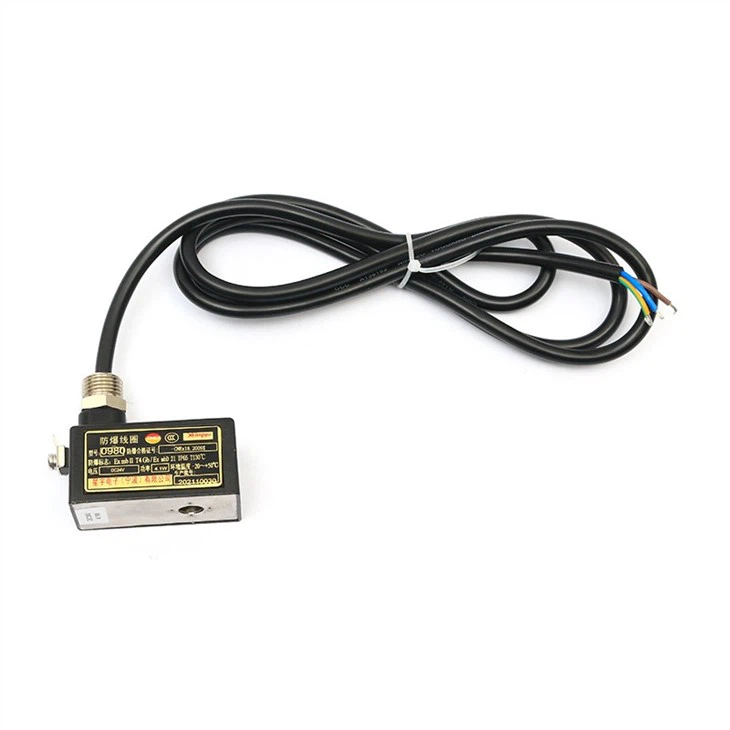
We offer a variety of coils suitable for harsh environments, such as the Ex Proof 220vac Solenoid Coil, the 110v Ac Solenoid Coil, and the 220v Ac Solenoid Valve Coil. These coils are designed to meet the specific requirements of different applications in harsh settings, ensuring reliable operation.
Mechanical Design
The mechanical design of the solenoid spool must account for the high forces and vibrations present in a harsh environment. The spool should have a robust shape and structure to withstand repeated impacts and stress. Fillets and radii should be used at sharp corners to reduce stress concentrations and prevent cracking.
The surface finish of the spool is also important. A smooth surface finish can reduce friction and wear, improving the overall efficiency and longevity of the solenoid valve. In addition, the design should allow for easy assembly and disassembly, which is crucial for maintenance and repair in harsh conditions.
Environmental Resistance
Harsh environments can include dust, dirt, and other contaminants. The solenoid spool should be designed to prevent the ingress of these particles. This can be achieved through the use of shields or enclosures. A properly designed shield can protect the spool from direct contact with dust and dirt, while an enclosure can provide a more comprehensive barrier.
In explosive environments, the solenoid spool must meet strict safety standards. Ex - proof designs are essential to prevent the ignition of flammable substances. These designs typically involve enclosing the electrical components in a flame - proof housing and ensuring that all electrical connections are properly insulated.
Thermal Management
Temperature variations can have a significant impact on the performance of a solenoid spool. In high - temperature environments, the material properties of the spool and its components can change, leading to reduced efficiency or even failure. To address this, proper thermal management techniques should be employed.
One approach is to use heat - dissipating materials or structures. For example, heat sinks can be added to the solenoid coil to transfer heat away from the coil and prevent overheating. Additionally, the flow path of the fluid through the solenoid valve can be designed to carry away some of the heat generated by the coil and other components.
Testing and Validation
Before a solenoid spool is released for use in a harsh environment, it must undergo rigorous testing and validation. This includes testing under simulated harsh conditions, such as high temperatures, high pressures, and exposure to chemicals. The spool should be tested for its mechanical strength, sealing performance, and electrical properties.
The test results can be used to optimize the design and ensure that the solenoid spool meets the required standards and specifications. Continuous improvement based on testing results is crucial to provide high - quality products that can perform reliably in harsh environments.
Ease of Maintenance
Maintenance is an important aspect of any component operating in a harsh environment. The solenoid spool should be designed in a way that allows for easy inspection, cleaning, and replacement of parts. Access points should be provided to allow technicians to reach the internal components without having to disassemble the entire valve.
The use of standardized parts can also simplify maintenance. If a part fails, it can be easily replaced with a readily available standard component, reducing downtime and maintenance costs.
Conclusion
Designing a solenoid spool for a harsh environment requires a comprehensive approach that takes into account material selection, sealing design, coil compatibility, mechanical design, environmental resistance, thermal management, testing, and ease of maintenance. As a solenoid spool supplier, we are committed to providing high - quality products that meet the specific needs of our customers in harsh environments.
If you are in need of solenoid spools for your harsh - environment applications, we invite you to contact us for procurement and further discussions. Our team of experts is ready to assist you in finding the most suitable solutions for your requirements.
References
- ASM International. (2004). Handbook of Stainless Steels. ASM International.
- Parker Hannifin Corporation. (2019). Sealing Handbook. Parker Hannifin Corporation.
- IEC 60079 - 0:2017. Explosive atmospheres - Part 0: General requirements. International Electrotechnical Commission.