

Can Namur solenoids be used in automotive applications?
As a supplier of Namur solenoids, I've been frequently asked whether these solenoids can be used in automotive applications. This blog post aims to explore this question in depth, considering the technical specifications, advantages, limitations, and potential use - cases of Namur solenoids in the automotive industry.
Understanding Namur Solenoids
Namur solenoids are a type of pneumatic solenoid valve that follows the Namur standard. This standard defines the interface dimensions and characteristics for mounting solenoid valves on pneumatic actuators. These solenoids are widely used in industrial automation due to their reliability, compact design, and ease of installation.
The working principle of Namur solenoids is based on the electromagnetic effect. When an electrical current is applied to the solenoid coil, it generates a magnetic field that moves a plunger. This movement either opens or closes the valve, controlling the flow of air or other pneumatic media.
Technical Specifications Relevant to Automotive Applications
Voltage Compatibility
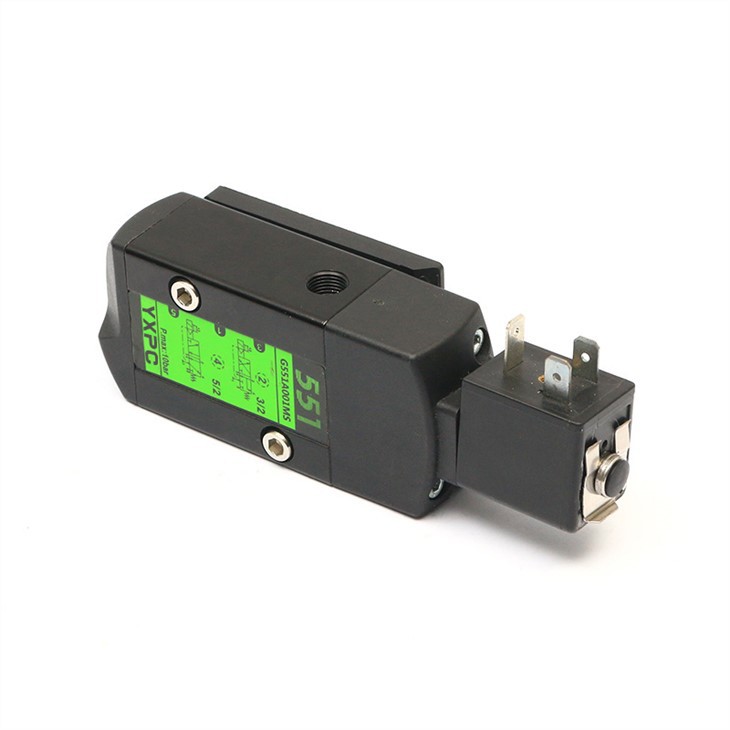
Automotive electrical systems typically operate at 12 volts. Fortunately, many Namur solenoids are available in 12 - volt configurations, such as the Pneumatic Solenoid Valve 12 Volt. This voltage compatibility makes them a potential candidate for direct integration into automotive electrical systems without the need for complex voltage conversion circuits.

Response Time
In automotive applications, quick response times are often crucial. For example, in systems like active suspension or engine intake control, the solenoid needs to actuate rapidly to adjust to changing driving conditions. Namur solenoids generally have relatively fast response times, which can meet the requirements of many automotive applications. However, the exact response time can vary depending on the specific model and design of the solenoid.
Environmental Resistance
Automotive environments are harsh, with exposure to temperature variations, vibrations, moisture, and contaminants. Namur solenoids are designed to be robust and can withstand a certain degree of environmental stress. Some models are sealed to protect against moisture and dust, which is beneficial for automotive use. However, extreme temperature variations in automotive applications, such as in engines or during cold - weather starts, may require additional consideration.
Advantages of Using Namur Solenoids in Automotive Applications
Compact Design
Automotive systems often have limited space. The compact design of Namur solenoids allows for easy integration into tight spaces within the vehicle. They can be mounted directly on pneumatic actuators, reducing the overall footprint of the control system.
Standardization
The Namur standard provides a high level of standardization. This means that different manufacturers' Namur solenoids are generally interchangeable, which simplifies maintenance and replacement processes in automotive applications. Mechanics and technicians can easily find compatible replacement parts, reducing downtime in case of a solenoid failure.
Precise Control
Namur solenoids offer precise control over pneumatic flow. In automotive applications such as air - brake systems or fuel - injection control, precise control of air or fluid flow is essential for optimal performance. The ability to accurately regulate the opening and closing of the valve allows for better control of the overall system.
Limitations and Challenges
Cost
Compared to some traditional automotive solenoids, Namur solenoids can be relatively expensive. The cost of development, manufacturing to the Namur standard, and the use of high - quality materials contribute to the higher price. This cost factor may be a deterrent for some automotive manufacturers, especially in cost - sensitive applications.
Limited Flow Capacity
Some Namur solenoids may have limited flow capacity compared to larger - scale automotive solenoids. In applications that require a high volume of air or fluid flow, such as large - displacement engine intake systems, the flow capacity of Namur solenoids may not be sufficient.
Thermal Management
As mentioned earlier, automotive environments can have extreme temperature variations. Namur solenoids may require additional thermal management solutions to ensure reliable operation in high - temperature areas, such as near the engine. Failure to manage heat properly can lead to reduced performance or even premature failure of the solenoid.
Potential Automotive Use - Cases
Active Suspension Systems
Active suspension systems in modern vehicles use solenoids to control the flow of hydraulic or pneumatic fluid to adjust the suspension stiffness in real - time. Namur solenoids can be used in these systems due to their fast response times and precise control capabilities. By adjusting the suspension based on road conditions and driving behavior, the vehicle can provide a smoother and safer ride.
Engine Intake and Exhaust Control
In engine management systems, Namur solenoids can be used to control the intake and exhaust valves. They can regulate the flow of air into the engine, optimizing the air - fuel mixture for better performance and fuel efficiency. Additionally, they can be used in exhaust gas recirculation (EGR) systems to control the flow of exhaust gases back into the engine intake.
Pneumatic Brake Systems
Some automotive pneumatic brake systems use solenoids to control the application and release of brakes. Namur solenoids, with their reliable operation and precise control, can be suitable for these applications. For example, in heavy - duty vehicles or some high - performance cars with pneumatic brake assistance, Namur solenoids can ensure quick and accurate brake actuation.
Conclusion
In conclusion, Namur solenoids have the potential to be used in automotive applications. Their voltage compatibility, compact design, standardization, and precise control capabilities make them attractive for various automotive systems. However, challenges such as cost, limited flow capacity, and thermal management need to be carefully considered.
If you are an automotive manufacturer or engineer interested in exploring the use of Namur solenoids in your applications, I encourage you to reach out for further discussion. We can provide detailed technical information, product samples, and work with you to find the best - suited Namur solenoid solutions for your specific needs. Whether it's for active suspension, engine control, or brake systems, our namur pneumatic solenoid valve and Pneumatic Three Way Valve products can offer reliable performance.
References
- "Automotive Pneumatic Systems: Design and Applications" - A comprehensive book on automotive pneumatic technology.
- Manufacturer's technical documentation for Namur solenoids, which provides detailed specifications and performance data.
- Industry research reports on the use of solenoids in automotive applications.