

Can a 5 way air valve be used for controlling double - acting cylinders?
Hey there! As a supplier of 5 way air valves, I often get asked if these valves can be used for controlling double - acting cylinders. Well, let's dive right into it and find out!
First off, let's understand what a double - acting cylinder is. A double - acting cylinder is a type of pneumatic or hydraulic cylinder where the piston can move in both directions. It has two ports for air or fluid intake, one for extending the piston and the other for retracting it. This allows for more precise control and is commonly used in applications where you need to perform work in both directions, like in industrial automation, robotics, and some types of machinery.
Now, what about the 5 way air valve? A 5 way air valve, as the name suggests, has five ports. These ports are used to control the flow of compressed air in a pneumatic system. The valve can direct the air to different parts of the system, allowing for complex control of pneumatic components.
So, can a 5 way air valve be used for controlling double - acting cylinders? The short answer is yes! In fact, it's a great match. Here's why.
One of the main advantages of using a 5 way air valve to control a double - acting cylinder is the ability to control the cylinder's movement in both directions. With a 5 way valve, you can easily switch the flow of air to either side of the cylinder's piston. When you want to extend the cylinder, the valve can direct compressed air to the port that pushes the piston out. And when you want to retract the cylinder, it can switch the air flow to the other port, pulling the piston back in.
Another benefit is the flexibility it offers. A 5 way air valve can be configured in different ways depending on your specific application. You can choose from different actuation methods, such as manual, solenoid, or pilot - operated. For example, if you need a quick and automated control, a solenoid - actuated 5 way air valve might be the way to go. You can check out our Air Solenoid Valve 3 Way for more information on solenoid - operated valves.
In addition, 5 way air valves are known for their reliability. They are designed to withstand the rigors of industrial environments, with features like durable seals and corrosion - resistant materials. This means that they can provide long - term, trouble - free operation when used to control double - acting cylinders.
Let's take a look at how a 5 way air valve actually works in a system with a double - acting cylinder. When the valve is in its normal state, the air is usually blocked from entering the cylinder. When you activate the valve (for example, by energizing a solenoid), it opens up the ports and allows compressed air to flow into one side of the cylinder. This causes the piston to move in one direction. When you de - activate the valve or activate it in the opposite way, the air flow is redirected to the other side of the cylinder, and the piston moves back.
There are also some safety features associated with using a 5 way air valve for double - acting cylinders. Many 5 way valves have built - in features like exhaust ports that can quickly release the air pressure in case of an emergency. This helps to prevent damage to the cylinder and other components in the system.
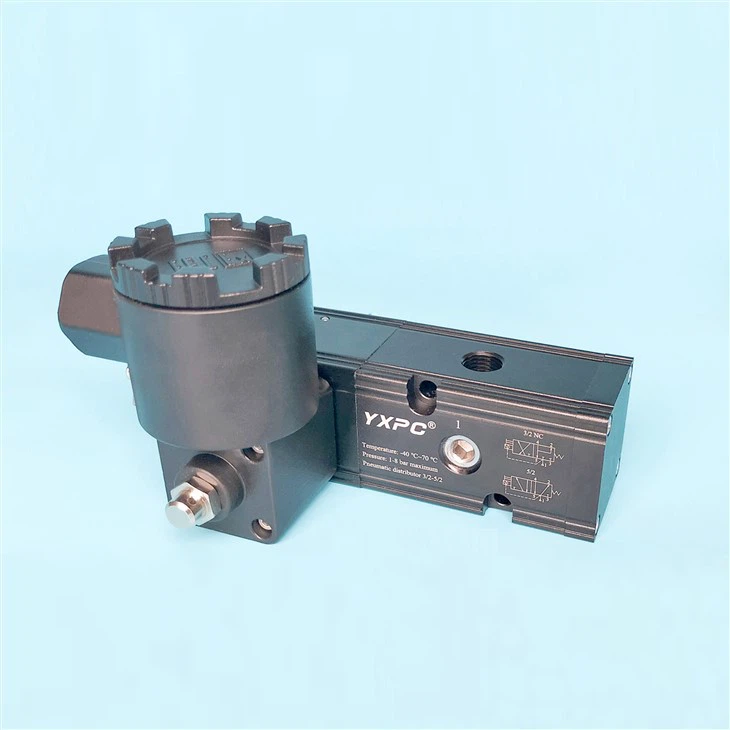
Now, let's talk about some of the different types of 5 way air valves that are suitable for controlling double - acting cylinders. We have the Explosion Proof 5 Way Pneumatic Valve, which is great for applications in hazardous environments where there is a risk of explosion. These valves are designed to meet strict safety standards and can operate safely in areas with flammable gases or dust.
We also offer the 24vdc Pneumatic Solenoid Valve, which is a popular choice for applications that require a low - voltage power supply. These valves are easy to integrate into automated systems and can provide reliable control of double - acting cylinders.
When choosing a 5 way air valve for your double - acting cylinder, there are a few things to consider. First, you need to make sure that the valve has the right flow rate. The flow rate of the valve determines how quickly the cylinder can move. If the flow rate is too low, the cylinder may move slowly or not at all. On the other hand, if the flow rate is too high, it can cause excessive wear and tear on the cylinder and other components.
You also need to consider the pressure rating of the valve. The pressure rating should be compatible with the operating pressure of your pneumatic system. Using a valve with a lower pressure rating than required can lead to valve failure, while using a valve with a much higher pressure rating than necessary can be wasteful and expensive.
In conclusion, a 5 way air valve is an excellent choice for controlling double - acting cylinders. It offers precise control, flexibility, and reliability. Whether you're working on a small - scale automation project or a large - scale industrial application, a 5 way air valve can help you get the job done.

If you're interested in purchasing 5 way air valves for your double - acting cylinders, or if you have any questions about our products, don't hesitate to reach out. We're here to help you find the right solution for your specific needs.
References
- Pneumatic Systems Handbook: A comprehensive guide to pneumatic components and systems.
- Industrial Automation Textbooks: Covers the principles and applications of automation in industrial settings.