

What is the temperature range of a 12 Volt Solenoid Coil?
Hey there! As a supplier of 12 Volt Solenoid Coils, I often get asked about the temperature range of these little power - packed components. So, I thought I'd take a few minutes to break it down for you.
First off, let's understand what a 12 Volt Solenoid Coil is. It's a fundamental part of many electrical and mechanical systems. Picture it as a coil of wire that, when an electric current flows through it, creates a magnetic field. This magnetic field can then be used to move a plunger or some other mechanical part, making it super useful in things like solenoid valves, which control the flow of liquids or gases.
Now, onto the main question: what's the temperature range of a 12 Volt Solenoid Coil? Well, it's not a one - size - fits - all answer. There are several factors that can affect this range.
Factors Affecting the Temperature Range
1. Coil Material
The material used to make the coil plays a huge role. Most 12 Volt Solenoid Coils are made from copper wire because it's an excellent conductor of electricity. Copper has a relatively high melting point, but its performance can start to degrade at elevated temperatures. As the temperature rises, the resistance of the copper wire increases. This means that for the same voltage (in this case, 12 volts), the current flowing through the coil will decrease. And since the magnetic field strength is related to the current, a decrease in current can lead to a weaker magnetic field.
2. Insulation
The insulation around the coil is also crucial. It protects the wire from short - circuits and helps to keep the coil functioning properly. Different types of insulation have different temperature ratings. For example, some common insulation materials like PVC (Polyvinyl Chloride) have a lower temperature limit compared to more high - performance materials like Teflon. If the temperature exceeds the rating of the insulation, it can start to break down, which can lead to a short - circuit and potentially damage the entire solenoid coil.
3. Ambient Temperature
The temperature of the environment where the solenoid coil is installed matters a great deal. If you're using the coil in a hot industrial setting, say in a factory near a furnace, the ambient temperature can be quite high. On the other hand, if it's used in a cold storage facility, the ambient temperature will be much lower. The coil has to be able to operate within this ambient temperature range without failing.
Typical Temperature Ranges
In general, a well - designed 12 Volt Solenoid Coil can operate within a temperature range of about - 40°C to 85°C. The lower end of this range, around - 40°C, is suitable for applications in cold environments like refrigeration units or outdoor equipment in cold climates. At these low temperatures, the main concern is the brittleness of the insulation and the potential for the mechanical parts to become stiff.
On the higher end, 85°C is a common upper limit. However, some high - performance solenoid coils can operate at even higher temperatures, up to 120°C or more. These are often used in applications where the coil is likely to generate a lot of heat due to continuous operation or in high - temperature environments.
What Happens Outside the Temperature Range?
1. Low Temperatures
When the temperature drops below the lower limit of the coil's operating range, the mechanical parts of the solenoid can become stiff. The plunger might not move as smoothly, which can affect the overall performance of the solenoid. Also, the insulation can become brittle and crack, increasing the risk of a short - circuit.
2. High Temperatures
If the temperature goes above the upper limit, the resistance of the coil wire increases significantly. This can cause the coil to draw more current, which in turn generates even more heat. It's a vicious cycle that can eventually lead to the coil overheating and burning out. The insulation can also break down, causing a short - circuit and potentially damaging other components in the system.

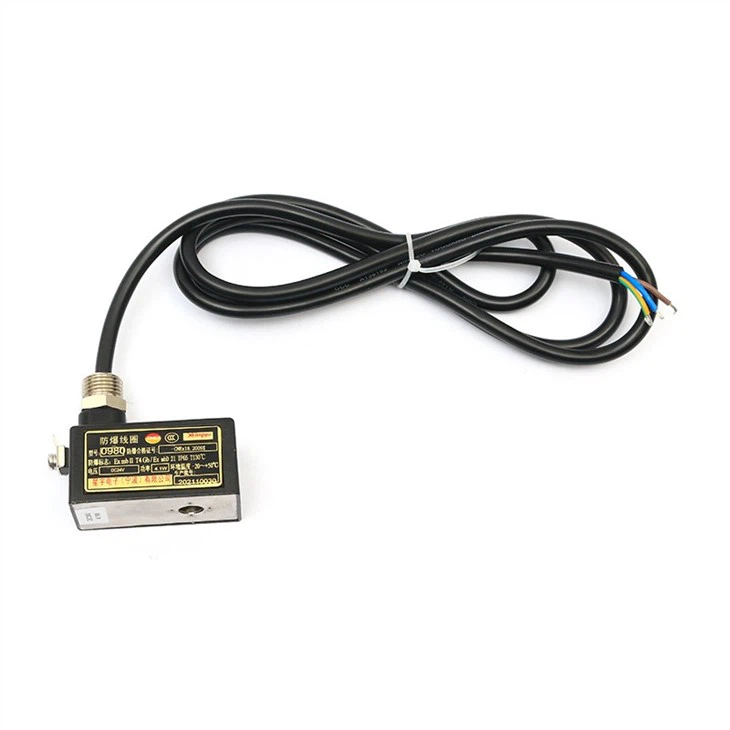
Our Product Offerings
As a supplier, we understand the importance of having solenoid coils that can operate within the right temperature range for your specific application. We offer a wide range of 12 Volt Solenoid Coils with different temperature ratings. Whether you need a coil for a cold - climate application or a high - temperature industrial setting, we've got you covered.
We also provide related products like Solenoid Valve Coil Explosion Proof, which are designed to be safe in potentially explosive environments. Our Solenoid Valve Spool Core is another high - quality product that works seamlessly with our solenoid coils. And if you're looking for a different voltage option, we have the 220V AC Solenoid Valve Coil as well.
Why Choose Us?
- Quality Assurance: We use high - quality materials and strict manufacturing processes to ensure that our solenoid coils meet the highest standards.
- Customization: We can customize the temperature range and other specifications of our solenoid coils according to your specific requirements.
- Expert Support: Our team of experts is always ready to help you choose the right product for your application and answer any questions you might have.
Contact Us for Purchasing
If you're in the market for 12 Volt Solenoid Coils or any of our other products, don't hesitate to get in touch. We're here to help you find the perfect solution for your needs. Whether you have a small - scale project or a large - scale industrial application, we can provide the right products and support. Just reach out, and we'll start the conversation about how we can work together.
References
- "Electrical Engineering Handbook" - A comprehensive guide on electrical components and their operating conditions.
- Manufacturer's specifications for common solenoid coil materials and insulation.