

What is the rated power of a 110v solenoid coil?
Hey there! As a supplier of 110v solenoid coils, I often get asked about the rated power of these little wonders. So, I thought I'd sit down and write a blog post to clear up some of the confusion.
First off, let's talk about what a solenoid coil is. A solenoid coil is basically an electromagnet. When you pass an electric current through it, it creates a magnetic field. This magnetic field can then be used to move a plunger or some other mechanical part. Solenoid coils are used in a whole bunch of applications, from industrial machinery to household appliances.
Now, the rated power of a 110v solenoid coil is a pretty important thing to know. It tells you how much electrical power the coil is designed to consume under normal operating conditions. The rated power is usually given in watts (W).
So, how do you figure out the rated power of a 110v solenoid coil? Well, it's actually not too complicated. The power (P) in an electrical circuit is calculated using the formula P = V x I, where V is the voltage and I is the current. In the case of a 110v solenoid coil, the voltage (V) is 110 volts. To find the current (I), you can use an ammeter to measure it when the coil is operating. Once you have the current value, you just multiply it by the voltage to get the power.
But here's the thing - the current draw of a solenoid coil can vary depending on a few factors. One of the main factors is the load on the coil. When the solenoid is just sitting there, not doing any work, it might draw a relatively low current. But when it's actuating a valve or moving a plunger, the current draw can increase.
Another factor that can affect the current draw is the resistance of the coil. The resistance of the coil is determined by things like the number of turns of wire, the gauge of the wire, and the material of the wire. A coil with more turns of wire or a thinner gauge of wire will generally have a higher resistance. And according to Ohm's Law (V = I x R, where R is the resistance), a higher resistance will result in a lower current for a given voltage.

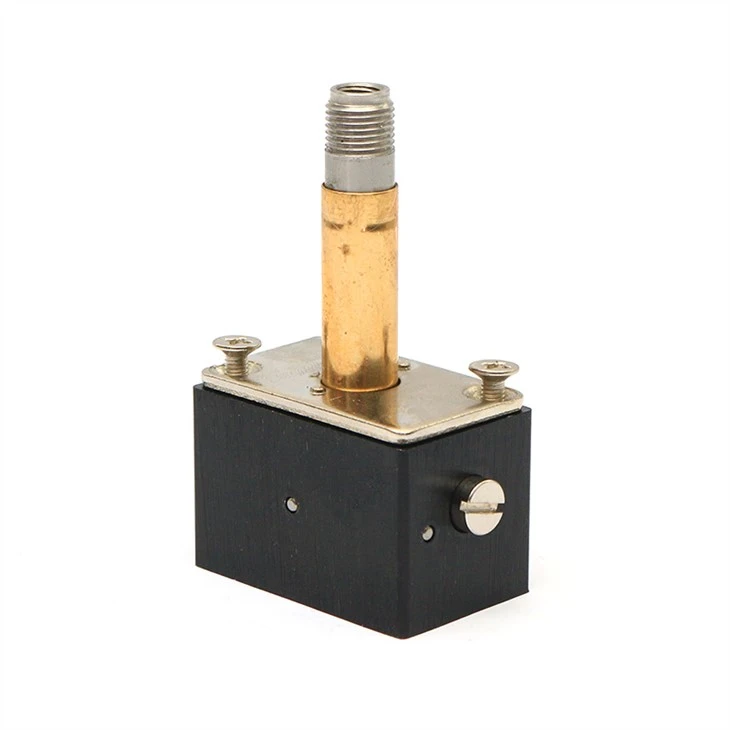
Now, let's talk about why the rated power is important. Knowing the rated power of a 110v solenoid coil is crucial for a few reasons. First of all, it helps you make sure that you're providing the right amount of power to the coil. If you supply too much power, you could overheat the coil and damage it. On the other hand, if you supply too little power, the coil might not be able to generate enough magnetic force to do its job.
Secondly, the rated power can also affect the efficiency of the solenoid. A more efficient solenoid will convert more of the electrical power it consumes into useful mechanical work. This means that you'll get more bang for your buck in terms of energy usage.
As a 110v solenoid coil supplier, I offer a wide range of solenoid coils with different rated powers. Whether you need a low-power coil for a small, delicate application or a high-power coil for a heavy-duty industrial task, I've got you covered.
In addition to 110v solenoid coils, I also supply other related products. For example, if you're looking for a Solenoid Valve Armature Plunger, I can provide you with high-quality ones. These plungers are an essential part of a solenoid valve system, and they work in conjunction with the solenoid coil to control the flow of fluids or gases.
I also have 220V AC Solenoid Valve Coil in stock. These coils are designed to operate at 220 volts, which is a common voltage in many parts of the world. They're suitable for a variety of applications, just like the 110v coils.
And if you're working in a hazardous environment where explosion-proof equipment is required, I offer ex proof 220vac solenoid coil. These coils are specially designed to prevent the ignition of flammable gases or vapors, making them safe to use in potentially dangerous situations.
If you're in the market for a 110v solenoid coil or any of the related products I mentioned, I'd love to hear from you. Whether you have questions about the rated power, need help choosing the right coil for your application, or just want to place an order, feel free to reach out. I'm here to provide you with the best products and the best service possible. Let's start a conversation and see how I can meet your solenoid coil needs.
References:
- Electrical Engineering textbooks for basic electrical formulas and principles
- Industry standards and guidelines for solenoid coil design and operation