

What is the hysteresis of a solenoid drain valve?
In the realm of fluid control systems, solenoid drain valves play a pivotal role. These valves are widely used in various industries to manage the flow of liquids and gases, ensuring efficient and reliable operation. One of the important concepts associated with solenoid drain valves is hysteresis. In this blog, as a solenoid drain valve supplier, I will delve into what the hysteresis of a solenoid drain valve is, its implications, and how it relates to the performance of our products.
Understanding Solenoid Drain Valves
Before we dive into hysteresis, let's briefly understand what solenoid drain valves are. A solenoid drain valve is an electromechanical device that uses an electromagnetic field to control the opening and closing of a valve. When an electrical current is applied to the solenoid coil, it generates a magnetic field that moves a plunger or armature, which in turn opens or closes the valve. This simple yet effective mechanism allows for precise control of fluid flow.
Solenoid drain valves are used in a wide range of applications, including compressed air systems, steam systems, water treatment plants, and refrigeration systems. They are valued for their fast response times, high reliability, and ease of integration into automated control systems.
What is Hysteresis?
Hysteresis is a phenomenon that occurs in many physical systems, including solenoid drain valves. In general terms, hysteresis refers to the dependence of the state of a system on its history. In the context of a solenoid drain valve, hysteresis is the difference between the opening and closing points of the valve with respect to the applied electrical signal.
When an electrical current is gradually increased to open the solenoid drain valve, there is a certain threshold current at which the valve starts to open. This is called the opening current. As the current is then decreased, the valve does not close immediately at the same current level as the opening current. Instead, the valve remains open until the current drops below a lower threshold, known as the closing current. The difference between the opening current and the closing current is the hysteresis of the solenoid drain valve.
Mathematically, hysteresis (H) can be expressed as:
H = I_opening - I_closing
where I_opening is the opening current and I_closing is the closing current.
Causes of Hysteresis in Solenoid Drain Valves
There are several factors that contribute to the hysteresis in solenoid drain valves:
Magnetic Properties
The solenoid coil in a solenoid drain valve is made of a magnetic material. When an electrical current flows through the coil, it creates a magnetic field. The magnetic properties of the material, such as its coercivity and remanence, can cause hysteresis. Coercivity is the amount of reverse magnetic field required to reduce the magnetization of the material to zero, while remanence is the residual magnetization that remains in the material after the external magnetic field is removed. These properties cause the magnetic field in the solenoid to behave differently when the current is increasing compared to when it is decreasing, leading to hysteresis in the valve operation.
Mechanical Friction
The movement of the plunger or armature inside the solenoid drain valve is subject to mechanical friction. When the valve is opening, the friction opposes the movement of the plunger, requiring a higher current to overcome it. As the current is decreased and the valve is closing, the friction acts in the opposite direction, helping to keep the valve open until a lower current is reached. This mechanical friction contributes to the difference between the opening and closing currents, resulting in hysteresis.
Fluid Pressure
The fluid pressure acting on the valve also affects its operation. When the valve is opening, the fluid pressure can resist the movement of the plunger, requiring a higher current to open the valve. As the valve is closing, the fluid pressure can have a damping effect, delaying the closing of the valve until a lower current is applied. This interaction between the fluid pressure and the valve movement adds to the hysteresis in the system.
Implications of Hysteresis in Solenoid Drain Valves
The hysteresis in solenoid drain valves has both positive and negative implications:
Positive Implications
- Stability: Hysteresis can provide stability to the valve operation. By having a difference between the opening and closing currents, the valve is less likely to oscillate or chatter between the open and closed states. This is particularly important in applications where precise control of the fluid flow is required.
- Noise Reduction: The presence of hysteresis can reduce the noise generated by the valve during operation. Since the valve does not switch between the open and closed states as easily, there is less mechanical impact and vibration, resulting in quieter operation.
Negative Implications
- Control Accuracy: Hysteresis can affect the control accuracy of the solenoid drain valve. In applications where precise control of the valve opening and closing is required, the difference between the opening and closing currents can introduce errors. For example, in a process control system where the valve needs to open and close at specific setpoints, the hysteresis can cause the valve to deviate from the desired operation, leading to inaccurate fluid flow control.
- Energy Consumption: The need to apply a higher current to open the valve compared to the current required to keep it open can result in increased energy consumption. This is especially significant in applications where the valve is frequently opened and closed, as the additional energy used to overcome the hysteresis can add up over time.
Managing Hysteresis in Solenoid Drain Valves
As a solenoid drain valve supplier, we take several measures to manage the hysteresis in our products:
Material Selection
We carefully select the materials for the solenoid coil and the plunger to minimize the magnetic hysteresis. By using materials with low coercivity and remanence, we can reduce the difference between the opening and closing magnetic fields, thereby reducing the hysteresis in the valve operation.
Design Optimization
Our engineers optimize the design of the solenoid drain valve to reduce mechanical friction. This includes using high - quality bearings and lubricants, as well as designing the valve components to have smooth surfaces and proper clearances. By reducing the mechanical friction, we can minimize the contribution of friction to the hysteresis.
Control Strategies
We also develop advanced control strategies to compensate for the hysteresis in our solenoid drain valves. These strategies involve adjusting the electrical current applied to the valve based on its operating history and the desired flow rate. By using these control strategies, we can improve the control accuracy of the valves and reduce the impact of hysteresis on the system performance.
Our Solenoid Drain Valve Products
As a leading solenoid drain valve supplier, we offer a wide range of solenoid drain valves to meet the diverse needs of our customers. Our products are designed with high - quality materials and advanced manufacturing techniques to ensure reliable and efficient operation.
We have Solenoid Valve Gas Lpg which are specifically designed for use with gas and LPG applications. These valves are built to withstand the high pressures and harsh environments associated with gas systems, while providing precise control of the gas flow.

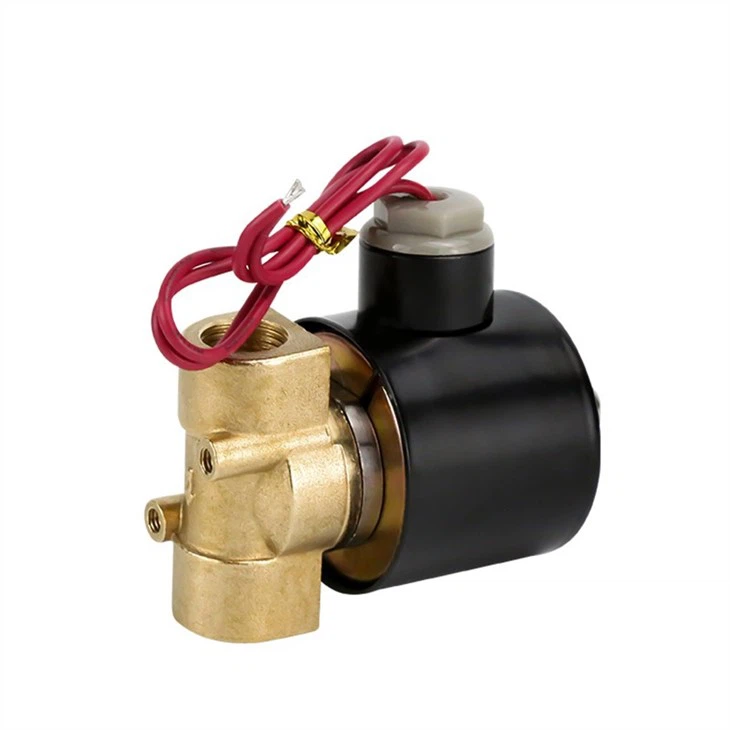
Our Electric Water Valve 220V is suitable for water control applications. It can operate at a voltage of 220V, making it compatible with many standard electrical systems. The valve is designed to have a low hysteresis, ensuring accurate control of the water flow.
We also offer Solenoid Valve Air Water Brass which are made of brass for durability and corrosion resistance. These valves can be used for both air and water applications, providing a versatile solution for fluid control.
Conclusion
In conclusion, hysteresis is an important concept in the operation of solenoid drain valves. It is caused by a combination of magnetic properties, mechanical friction, and fluid pressure, and has both positive and negative implications for the valve performance. As a solenoid drain valve supplier, we understand the significance of hysteresis and take steps to manage it in our products. Our high - quality solenoid drain valves are designed to minimize hysteresis and provide accurate and reliable fluid control.
If you are in need of solenoid drain valves for your application, we invite you to contact us for a detailed discussion. Our team of experts can help you select the right valve for your specific requirements and provide you with the best solution for your fluid control needs.
References
- Dorf, R. C., & Bishop, R. H. (2016). Modern Control Systems. Pearson.
- Krause, P. C., Wasynczuk, O., & Sudhoff, S. D. (2013). Analysis of Electric Machinery and Drive Systems. Wiley.
- Perry, R. H., & Green, D. W. (2008). Perry's Chemical Engineers' Handbook. McGraw - Hill.