

What is the difference between a normally open and normally closed 5 way air valve?
Hey there! As a supplier of 5 way air valves, I often get asked about the difference between normally open (NO) and normally closed (NC) valves. So, I thought I'd break it down for you in this blog post.
What's a 5 Way Air Valve?
First off, let's quickly talk about what a 5 way air valve is. A 5 way air valve is a crucial component in pneumatic systems. It's designed to control the flow of compressed air in a circuit. These valves typically have five ports: one for the air supply, two for the actuator (like a cylinder), and two for exhaust. They're used in a wide range of applications, from industrial automation to robotics and beyond.
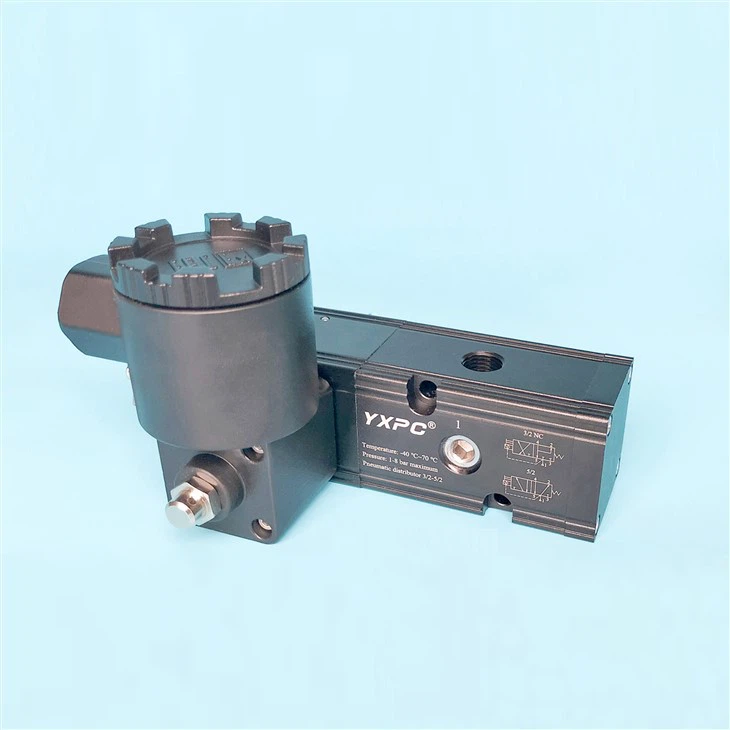

Normally Open 5 Way Air Valves
A normally open 5 way air valve is exactly what it sounds like. In its default or unpowered state, the valve allows air to flow from the supply port to one of the actuator ports. This means that without any electrical or external input, the connected actuator (such as a pneumatic cylinder) will be pressurized and in a certain position.
Let's say you're using a pneumatic cylinder to lift a load. With a normally open valve, the cylinder will be extended (or in the raised position) when there's no power to the valve. This can be really handy in situations where you want a certain action to happen automatically when the system is off. For example, in some safety systems, a normally open valve can be used to release pressure or return a component to a safe position in case of a power failure.
The operation of a normally open valve changes when it's powered. When an electrical signal is applied, the valve switches its state. The air supply is redirected, and the exhaust port connected to the previously pressurized actuator port opens. This causes the actuator to move to its other position.
Normally Closed 5 Way Air Valves
On the flip side, a normally closed 5 way air valve blocks the air flow from the supply port to the actuator ports when it's in its unpowered state. So, the connected actuator will be in a de - pressurized state by default. Using the same example of a pneumatic cylinder for lifting a load, with a normally closed valve, the cylinder will be retracted (or in the lowered position) when there's no power.
When power is applied to a normally closed valve, it opens the path between the air supply and one of the actuator ports. Compressed air then flows to the actuator, causing it to move. When the power is removed, the valve returns to its normally closed state, and the air in the actuator is exhausted through the appropriate port, bringing the actuator back to its original position.
Key Differences
1. Default State
The most obvious difference is the default state of the valve. As mentioned earlier, a normally open valve has an open path between the air supply and an actuator port in its unpowered state, while a normally closed valve blocks this path.
2. Power - On and Power - Off Behavior
The behavior of the connected actuator is also different. With a normally open valve, the actuator moves when power is applied, and returns to its original position when the power is removed. In a normally closed valve, the actuator stays in its original position until power is applied, and then moves back when the power is switched off.
3. Applications
The choice between a normally open and a normally closed valve depends on the specific application requirements.
Normally open valves are often used in safety - critical applications. For instance, in a fire suppression system, a normally open valve can be used to keep the water or extinguishing agent supply open until a fire is detected. When the fire detection system signals a problem, power is applied to the valve, closing it and stopping the flow of the agent.
Normally closed valves are more common in applications where you want to control the start and stop of an action. For example, in a factory assembly line, a normally closed valve can be used to control the movement of a robotic arm. The arm stays still until power is applied to the valve, and then it moves to perform its task. When the task is done and the power is removed, the arm returns to its idle position.
Our Product Range
At our company, we offer high - quality 5 way air valves, both normally open and normally closed. We also have a great selection of other related products like 24vdc Pneumatic Solenoid Valve and Air Solenoid Valve 3 Way. If you're looking for something that can handle more demanding environments, our Explosion Proof 5 Way Pneumatic Valve is a great option.
Why Choose Our Valves?
We understand that choosing the right valve is crucial for the proper functioning of your pneumatic system. Our valves are made using high - quality materials, which ensures durability and reliable performance. We have a team of experts who are always ready to provide technical support and help you select the right valve for your application. Whether you need a small batch for a prototype or a large quantity for a full - scale production, we can meet your requirements.
Let's Get in Touch
If you're in the market for 5 way air valves or any of our other products, don't hesitate to reach out. We're here to answer all your questions and help you make the best decision for your project. Whether you're a small business owner or part of a large industrial operation, we can provide the solutions you need. Contact us today to start a discussion about your specific requirements and let's work together to find the perfect valve for your pneumatic system.
References
- Pneumatic Handbook, various editions
- Industrial Pneumatics: Principles and Applications, by some well - known author in the field.