

What are the electromagnetic interference characteristics of a 110v solenoid coil?
As a supplier of 110V solenoid coils, I've encountered numerous inquiries regarding the electromagnetic interference (EMI) characteristics of these essential components. In this blog, I aim to delve deep into the topic, providing a comprehensive understanding of the EMI aspects associated with 110V solenoid coils.
Basic Principles of 110V Solenoid Coils
Before we explore the EMI characteristics, it's crucial to understand the basic operating principles of a 110V solenoid coil. A solenoid coil is an electromechanical device that converts electrical energy into mechanical motion. When an electric current flows through the coil, it generates a magnetic field. The strength of this magnetic field is proportional to the current flowing through the coil and the number of turns in the coil.
In a 110V solenoid coil, the coil is designed to operate at a voltage of 110 volts. This voltage is typically supplied by an AC power source. When the power is applied, the magnetic field generated by the coil attracts a ferromagnetic core, which is usually a metal plunger. This movement of the plunger can be used to control various mechanical functions, such as opening or closing a valve.
Sources of Electromagnetic Interference in 110V Solenoid Coils
There are several sources of electromagnetic interference in 110V solenoid coils. One of the primary sources is the switching action of the coil. When the power is turned on or off, there is a sudden change in the current flowing through the coil. This rapid change in current can generate high - frequency electromagnetic waves, which can interfere with other electronic devices in the vicinity.
Another source of EMI is the magnetic field generated by the coil itself. The magnetic field produced by the solenoid coil can extend beyond the physical boundaries of the coil. If there are other sensitive electronic components nearby, this magnetic field can induce unwanted currents in these components, leading to interference.
The arcing that occurs when the contacts of the solenoid coil open or close can also be a significant source of EMI. Arcing generates high - frequency electromagnetic radiation, which can propagate through the air and cause interference with other electronic systems.
Characteristics of Electromagnetic Interference
Frequency Spectrum
The EMI generated by a 110V solenoid coil typically has a wide frequency spectrum. The switching transients can generate frequencies in the range of several kilohertz to several megahertz. The arcing at the contacts can produce even higher frequencies, reaching into the gigahertz range. This wide frequency spectrum makes it challenging to filter out the interference, as different frequencies require different filtering techniques.
Amplitude
The amplitude of the EMI depends on several factors, such as the current flowing through the coil, the rate of change of the current, and the design of the coil. Higher currents and faster current changes generally result in higher - amplitude EMI. Additionally, poorly designed coils with high resistance or low inductance can also produce more significant EMI.
Directionality
The EMI from a 110V solenoid coil can be both radiated and conducted. Radiated EMI propagates through the air as electromagnetic waves, while conducted EMI travels through the power lines and other conductive paths. The directionality of the radiated EMI depends on the orientation of the coil and the surrounding environment. In some cases, the EMI can be concentrated in certain directions, which can cause more severe interference to nearby electronic devices.
Impact of Electromagnetic Interference
The EMI from 110V solenoid coils can have a significant impact on other electronic systems. In industrial settings, it can interfere with control systems, sensors, and communication devices. For example, interference with a sensor can lead to inaccurate readings, which can affect the overall performance of a manufacturing process.
In home appliances, EMI can cause problems with audio and video equipment, leading to distorted sound or picture quality. It can also interfere with wireless communication devices, such as Wi - Fi routers and mobile phones, causing signal dropouts or reduced signal strength.
Mitigation Strategies
To reduce the EMI generated by 110V solenoid coils, several mitigation strategies can be employed. One of the most common methods is the use of filters. Filters can be installed in the power supply lines to block the high - frequency components of the EMI. Capacitors and inductors are commonly used in filter circuits to provide low - impedance paths for high - frequency currents.
Shielding is another effective way to reduce EMI. The solenoid coil can be enclosed in a metal shield, which can absorb and redirect the electromagnetic waves. The shield should be properly grounded to ensure its effectiveness.
Proper coil design can also help reduce EMI. Using high - quality materials with low resistance and high inductance can minimize the current changes and arcing, thereby reducing the EMI. Additionally, designing the coil with a proper winding pattern can help to reduce the magnetic field leakage.
Our Offerings as a 110V Solenoid Coil Supplier
As a supplier of 110V solenoid coils, we understand the importance of minimizing electromagnetic interference. Our coils are designed with advanced techniques to reduce EMI. We use high - quality materials and precise manufacturing processes to ensure that our coils have low resistance and high inductance, which helps to reduce the switching transients and arcing.
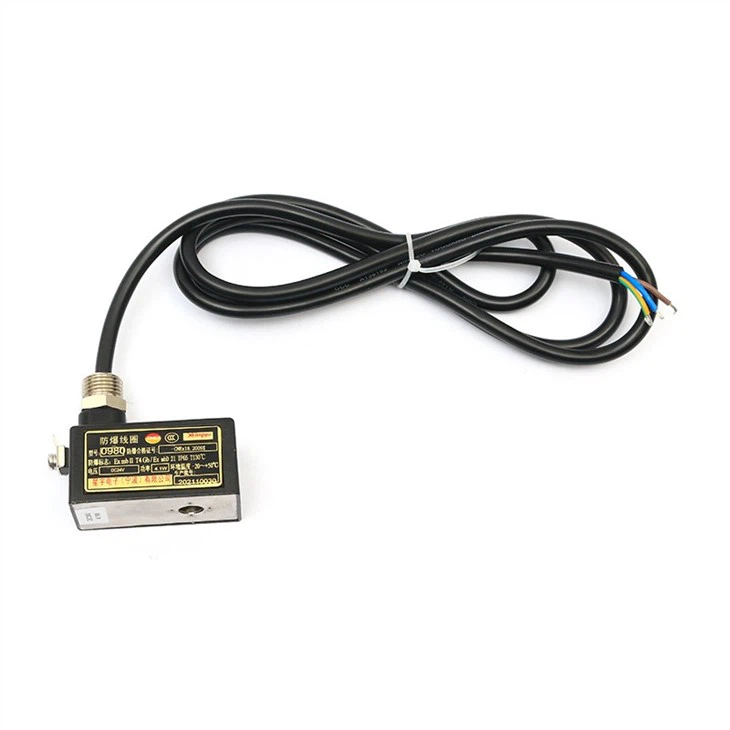
We also offer a range of accessories to further reduce EMI, such as filters and shields. Our Solenoid Valve Coil Explosion Proof is designed to meet the strictest safety and performance standards, with built - in features to minimize electromagnetic interference. Our Solenoid Valve Armature Plunger is carefully engineered to work in harmony with the coil, reducing the chances of arcing and other sources of EMI. And for those who require higher voltage options, our 220v Ac Solenoid Valve Coil is also designed with EMI reduction in mind.

Contact for Procurement and Discussion
If you are in need of high - quality 110V solenoid coils with low electromagnetic interference, we invite you to contact us for procurement and further discussion. Our team of experts is ready to assist you in selecting the right coil for your specific application and addressing any concerns you may have regarding EMI.
References
- "Electromagnetic Compatibility Engineering" by Henry W. Ott
- "Solenoid Valve Handbook" by David W. Spitzer