

How to connect a 5 way air valve to a control panel?
How to Connect a 5 Way Air Valve to a Control Panel
As a supplier of 5 way air valves, I often receive inquiries from customers about how to connect these valves to a control panel. In this blog post, I'll provide a comprehensive guide on this process, covering everything from understanding the components to the actual connection steps.
Understanding the 5 Way Air Valve
A 5 way air valve, also known as a 5/2 way valve, is a crucial component in pneumatic systems. It has five ports and two positions, which allows it to control the flow of compressed air in a complex way. The valve can be used to operate double - acting cylinders, where it can direct air to either side of the piston to extend or retract it.

The ports of a 5 way air valve typically include a pressure port (P), two exhaust ports (R and S), and two working ports (A and B). The pressure port is connected to the compressed air source, while the working ports are connected to the device being controlled (such as a cylinder), and the exhaust ports allow the air to escape when the valve switches positions.
Understanding the Control Panel
The control panel is the brain of the pneumatic system. It sends electrical signals to the 5 way air valve to control its operation. The control panel usually contains a power supply, control switches, and a solenoid driver circuit. The solenoid driver circuit is responsible for converting the low - level control signals from the switches or a programmable logic controller (PLC) into high - current signals that can actuate the solenoid on the 5 way air valve.
Components Needed for the Connection
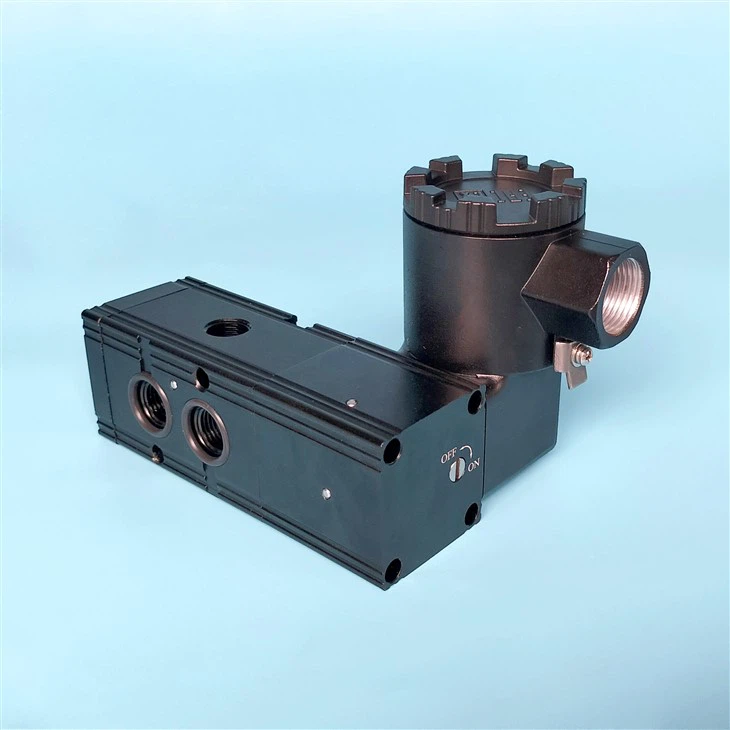
- 5 Way Air Valve: Of course, you need a high - quality 5 way air valve. Our explosion proof 5 way pneumatic valve is a great choice, which is designed to work in harsh environments with reliable performance.
- Control Panel: A suitable control panel that can generate the necessary electrical signals.
- Electrical Wiring: To connect the solenoid of the 5 way air valve to the control panel.
- Pneumatic Tubing: To connect the ports of the 5 way air valve to the compressed air source and the pneumatic device.
- Connectors: Electrical connectors for the wiring and pneumatic connectors for the tubing.
Pre - installation Checks
Before starting the connection process, it's important to perform some pre - installation checks: - Inspect the Valve: Check the 5 way air valve for any visible damage or defects. Make sure all ports are clean and free from debris. - Check the Control Panel: Ensure that the control panel is in good working condition and the power supply is properly connected. - Verify Compatibility: Confirm that the voltage and current requirements of the 5 way air valve's solenoid match the output capabilities of the control panel. For example, if your valve uses a 24vdc Pneumatic Solenoid Valve, the control panel should be able to provide a stable 24V DC output.
Pneumatic Connections
- Connect the Pressure Port (P): Use the pneumatic tubing and a suitable connector to connect the pressure port (P) of the 5 way air valve to the compressed air source. Make sure the connection is tight to prevent air leakage.
- Connect the Working Ports (A and B): Connect the working ports (A and B) to the pneumatic device (such as a double - acting cylinder). For example, if you are controlling a cylinder, port A can be connected to one side of the piston, and port B to the other side.
- Connect the Exhaust Ports (R and S): Connect the exhaust ports (R and S) to the atmosphere. You can use a muffler on the exhaust ports to reduce noise.
Electrical Connections
- Identify the Solenoid Wires: The 5 way air valve has a solenoid that is used to switch the valve positions. Locate the wires coming from the solenoid.
- Connect to the Control Panel: Use the electrical wiring and connectors to connect the solenoid wires to the output terminals of the solenoid driver circuit in the control panel. Make sure to follow the correct polarity if the solenoid is polarity - sensitive.
Testing the Connection
After completing the pneumatic and electrical connections, it's time to test the system: 1. Power On the Control Panel: Turn on the power supply of the control panel. Make sure all indicators on the panel are functioning correctly. 2. Actuate the Valve: Use the control switches on the panel to send signals to the 5 way air valve. You should hear the valve switching positions and see the pneumatic device (such as the cylinder) moving accordingly. 3. Check for Leaks: Inspect all pneumatic connections for air leakage. If you detect any leaks, tighten the connections or replace the faulty components.
Troubleshooting
If the 5 way air valve does not operate correctly after the connection, here are some common issues and solutions: - No Movement of the Valve: Check the electrical connections to ensure that the solenoid is receiving power. Also, check the control panel to make sure it is sending the correct signals. - Air Leakage: Tighten the pneumatic connections or replace the damaged tubing or connectors. - Incorrect Valve Positioning: This could be due to a faulty solenoid or incorrect wiring. Check the solenoid for continuity and verify the wiring connections.
Additional Tips
- Use Proper Grounding: Make sure the control panel and the 5 way air valve are properly grounded to prevent electrical interference and ensure safety.
- Follow Safety Procedures: When working with compressed air and electrical systems, always follow the safety procedures. Wear appropriate personal protective equipment.
Conclusion
Connecting a 5 way air valve to a control panel is a relatively straightforward process if you understand the components and follow the correct steps. By following the guidelines in this blog post, you should be able to complete the connection successfully.
If you are interested in purchasing high - quality 5 way air valves or other related products such as Air Solenoid Valve 3 Way, please feel free to contact us for procurement and negotiation. We are committed to providing you with the best products and services.
References
- "Pneumatic Systems Handbook" by various authors, which provides in - depth knowledge about pneumatic components and their connections.
- Manufacturer's manuals of 5 way air valves and control panels, which offer specific instructions for installation and operation.
No Information