

What is the inductance of a Namur solenoid coil?
Hey there! As a supplier of Namur solenoids, I often get asked about the inductance of a Namur solenoid coil. So, I thought I'd write this blog to break it down for you in a way that's easy to understand.
First off, let's talk a bit about what a Namur solenoid is. Namur solenoids are commonly used in industrial applications, especially in pneumatic systems. They're designed to be mounted directly on pneumatic actuators, making them a compact and efficient solution for controlling the flow of air or other gases. You can check out some of the related products like the double acting actuator Valve Pneumatic and the Pneumatic Three Way Valve on our website.
Now, onto the main topic - inductance. Inductance is a property of an electrical circuit that opposes changes in current. In simpler terms, it's like a kind of electrical inertia. When you have a coil of wire, like in a Namur solenoid, it has inductance because as current flows through the coil, it creates a magnetic field. And when the current tries to change, this magnetic field resists that change.
The inductance of a Namur solenoid coil depends on several factors. One of the main factors is the number of turns in the coil. Generally, the more turns the coil has, the higher its inductance. This is because each turn of the wire adds to the overall magnetic field created by the coil. So, if you have a solenoid with a lot of turns, it'll be more resistant to changes in current compared to one with fewer turns.
Another important factor is the core material of the coil. A solenoid can have an air core or a magnetic core. If it has a magnetic core, like iron or ferrite, the inductance will be much higher than if it has an air core. This is because the magnetic core enhances the magnetic field created by the current in the coil. The magnetic properties of the core material help to concentrate the magnetic field lines, increasing the overall inductance.

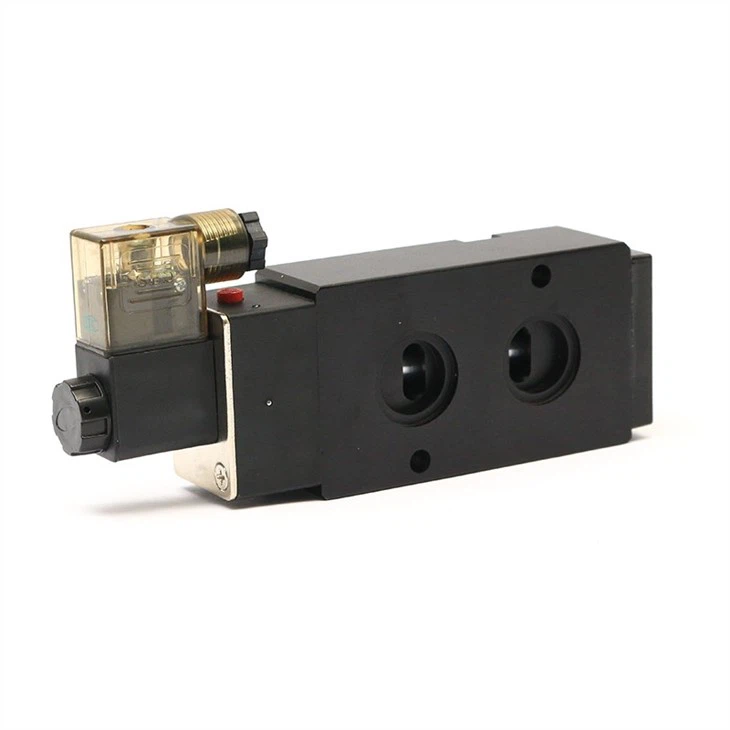
The cross - sectional area of the coil also plays a role. A larger cross - sectional area usually means higher inductance. This is because a larger area allows for more magnetic flux to pass through the coil, which in turn increases the inductance.
The length of the coil is yet another factor. Shorter coils tend to have higher inductance compared to longer ones. This is because in a shorter coil, the magnetic field lines are more concentrated, leading to a stronger magnetic field and thus higher inductance.
Now, why is the inductance of a Namur solenoid coil important? Well, it affects how the solenoid behaves in a circuit. For example, when you first apply a voltage to the solenoid, the inductance causes the current to build up gradually rather than instantly. This delay in current build - up can be crucial in some applications, especially those where you need precise control over the solenoid's operation.
Also, inductance can have an impact on the power consumption of the solenoid. A solenoid with high inductance may draw more current initially, but once the current stabilizes, it may consume less power. On the other hand, a solenoid with low inductance may reach its operating current more quickly but could potentially draw more power in the long run.
If you're using a Pneumatic Solenoid Valve 12 Volt, the inductance of the solenoid coil will affect how it responds to the 12 - volt power supply. A solenoid with the right inductance will operate smoothly and efficiently, ensuring proper control of the pneumatic system.
When it comes to measuring the inductance of a Namur solenoid coil, there are several methods. One common method is to use an LCR meter. This device can directly measure the inductance, capacitance, and resistance of a component. Another way is to use an oscilloscope in combination with a known resistor. By applying a voltage pulse to the solenoid and measuring the resulting current waveform, you can calculate the inductance using some basic electrical formulas.
As a Namur solenoid supplier, we make sure to carefully control the inductance of our solenoid coils during the manufacturing process. We use high - quality materials and precise manufacturing techniques to ensure that each solenoid has the optimal inductance for its intended application. Whether you need a solenoid for a simple pneumatic control system or a more complex industrial automation setup, we've got you covered.
If you're in the market for Namur solenoids or have any questions about the inductance of our solenoid coils, don't hesitate to reach out. We're always happy to help you find the right product for your needs and answer any technical questions you may have. Just start a conversation with us, and we can discuss your specific requirements and see how we can assist you in your procurement process.
References
- "Fundamentals of Electric Circuits" by Charles K. Alexander and Matthew N. O. Sadiku
- "Pneumatic Systems Design and Application" by John A. Campbell