

What is the difference between a slow - acting and fast - acting 110v solenoid coil?
In the realm of industrial automation and fluid control systems, solenoid coils play a pivotal role. As a dedicated supplier of 110v solenoid coils, I've witnessed firsthand the diverse needs of our customers and the importance of understanding the differences between slow - acting and fast - acting 110v solenoid coils. This knowledge can significantly impact the efficiency and performance of various applications, from simple home appliances to complex industrial machinery.
Understanding Solenoid Coils
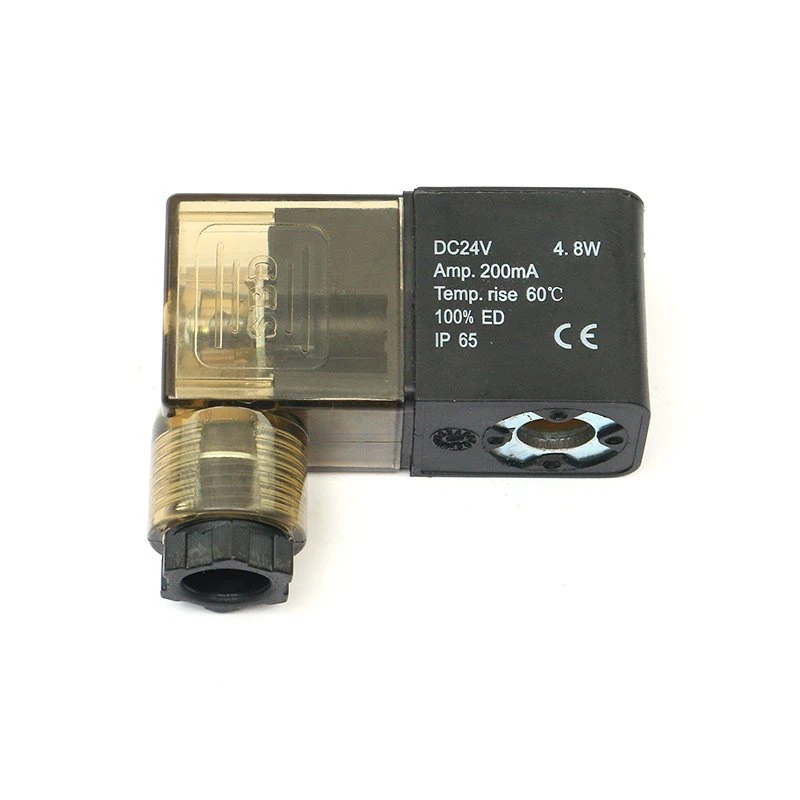
Before delving into the differences between slow - acting and fast - acting solenoid coils, it's essential to understand what a solenoid coil is. A solenoid coil is an electromagnetic device that converts electrical energy into mechanical energy. When an electric current passes through the coil, it creates a magnetic field. This magnetic field then interacts with a movable core, typically an armature plunger, to produce linear motion.
The 110v Ac Solenoid Coil is a common type used in many applications due to its compatibility with standard 110 - volt electrical systems. It is widely employed in solenoid valves, which are used to control the flow of liquids and gases in a variety of industries, including automotive, HVAC, and manufacturing.
Fast - Acting Solenoid Coils
Fast - acting solenoid coils are designed to achieve rapid actuation. They are characterized by their ability to generate a strong magnetic field quickly, which allows the armature plunger to move rapidly. This rapid movement is crucial in applications where immediate response is required.
One of the key features of fast - acting solenoid coils is their low inductance. Inductance is a property of an electrical circuit that opposes changes in current. A low - inductance coil allows the current to build up quickly when the power is applied, resulting in a fast - rising magnetic field. This fast - rising magnetic field then causes the Solenoid Valve Armature Plunger to move rapidly, opening or closing the valve in a short amount of time.
Fast - acting solenoid coils are commonly used in applications such as high - speed printing, packaging machinery, and some types of automotive fuel injectors. In high - speed printing, for example, the solenoid valve needs to open and close rapidly to control the flow of ink, ensuring precise and efficient printing. In automotive fuel injectors, fast actuation is necessary to accurately control the amount of fuel injected into the engine cylinders, improving engine performance and fuel efficiency.
However, fast - acting solenoid coils also have some drawbacks. The high current required to generate a fast - rising magnetic field can lead to increased power consumption and heat generation. This may require additional cooling measures to prevent overheating, which can reduce the lifespan of the coil and other components in the system.
Slow - Acting Solenoid Coils
In contrast, slow - acting solenoid coils are designed for applications where a more gradual actuation is required. They have a higher inductance compared to fast - acting coils, which means that the current builds up more slowly when the power is applied. As a result, the magnetic field also develops gradually, causing the armature plunger to move at a slower pace.
Slow - acting solenoid coils are often used in applications where a smooth and gentle operation is desired. For example, in some types of hydraulic and pneumatic systems, slow actuation can prevent sudden pressure changes that could damage the system or cause excessive wear on components. They are also used in applications where noise reduction is important, as the slower movement of the armature plunger produces less noise compared to fast - acting coils.
Another advantage of slow - acting solenoid coils is their lower power consumption. Since the current builds up gradually, the peak current is lower than that of fast - acting coils. This can result in energy savings over time, especially in applications where the solenoid valve is operated frequently.
However, the slow actuation speed of these coils may not be suitable for applications that require immediate response. In some cases, the delay in actuation can lead to reduced system efficiency or even malfunction.

Design and Construction Differences
The differences between slow - acting and fast - acting 110v solenoid coils are also reflected in their design and construction. Fast - acting coils are typically wound with a larger - gauge wire to reduce resistance and allow a higher current to flow quickly. They may also have a more compact design to minimize the distance between the coil and the armature plunger, enhancing the magnetic coupling and improving the response speed.
On the other hand, slow - acting coils are often wound with a smaller - gauge wire to increase the inductance. They may also have a larger physical size to accommodate more turns of wire, which further increases the inductance. Additionally, the magnetic circuit of slow - acting coils may be designed to provide a more gradual build - up of the magnetic field.
Application Considerations
When selecting between a slow - acting and fast - acting 110v solenoid coil, several factors need to be considered. First and foremost is the application requirements. If the application demands rapid response, such as in high - speed automation or precision control systems, a fast - acting coil is the obvious choice. However, if smooth operation, noise reduction, or energy savings are more important, a slow - acting coil may be more suitable.
The electrical environment is also an important consideration. Fast - acting coils require a power supply that can provide a high - current surge during actuation. If the power supply cannot meet this requirement, the coil may not operate properly. Slow - acting coils, on the other hand, are more forgiving in terms of power supply requirements, as they draw a lower peak current.
The operating temperature and environment also play a role in the selection process. Fast - acting coils tend to generate more heat due to their high - current operation, so they may require additional cooling in high - temperature environments. Slow - acting coils, with their lower power consumption, are generally more suitable for applications where heat generation needs to be minimized.
Safety Considerations
Safety is always a top priority when working with solenoid coils. Both slow - acting and fast - acting Solenoid Valve Coil Explosion Proof coils should be selected and installed in accordance with relevant safety standards. In hazardous environments, such as those with flammable gases or dust, explosion - proof coils are required to prevent the risk of fire or explosion.
Conclusion
In conclusion, the difference between slow - acting and fast - acting 110v solenoid coils lies in their actuation speed, power consumption, design, and application suitability. As a supplier of 110v solenoid coils, we understand the importance of providing our customers with the right product for their specific needs. Whether you require a fast - acting coil for high - speed applications or a slow - acting coil for smooth and energy - efficient operation, we have the expertise and product range to meet your requirements.
If you are in the market for 110v solenoid coils and need assistance in selecting the appropriate type for your application, please feel free to contact us for a consultation. Our team of experts is ready to help you make an informed decision and ensure that you get the best performance from your solenoid valve system.
References
- "Electromagnetic Devices: Fundamentals and Applications" by David A. Calahan
- "Solenoid Valve Handbook" by Peter A. Schweitzer
- Industry standards and technical documents related to solenoid coil design and operation