

What is the difference between a 5/2 way and 5/3 way air valve?
Hey there! As a supplier of 5 way air valves, I often get asked about the difference between a 5/2 way and a 5/3 way air valve. So, I thought I'd break it down for you in this blog post.
Let's start with the basics. The numbers in the names "5/2 way" and "5/3 way" actually tell us a lot about these valves. The first number, which is 5 in both cases, represents the number of ports the valve has. Ports are basically the openings where the air can enter or exit the valve. Having 5 ports gives these valves more flexibility in terms of how they can be used in a pneumatic system.
Now, let's talk about the second number. In a 5/2 way air valve, the 2 means that there are two positions that the valve can be in. Picture it like a switch that can be flipped to one of two states. In one position, the air flows through the valve in a certain pattern, and in the other position, the flow pattern changes. These valves are commonly used in applications where you need to control the movement of a single actuator, like a cylinder. For example, in a simple robotic arm, a 5/2 way valve can be used to extend and retract the arm. When the valve is in one position, air is sent to one side of the cylinder, causing it to extend. When it's flipped to the other position, the air flow is redirected to the other side of the cylinder, making it retract.
On the other hand, a 5/3 way air valve has three positions. This gives you more control options. The three positions can be set up in different ways, but a common configuration is a "center position" where the air flow to the actuator is blocked. The other two positions work similar to the 5/2 way valve, allowing air to flow to either side of the actuator. This center position can be really useful in applications where you need to stop the actuator in a specific position or hold it there. For instance, in a conveyor belt system, a 5/3 way valve can be used to stop the movement of a cylinder that controls the position of a pusher arm. When the valve is in the center position, the pusher arm stays still.
One of the main differences in terms of performance between these two types of valves is the level of control. The 5/3 way valve offers more precise control because of its three positions. This can be crucial in applications where accuracy is key, like in some manufacturing processes. However, this extra control comes at a cost. 5/3 way valves are generally more expensive than 5/2 way valves. So, if you don't need that extra level of control, a 5/2 way valve might be a more cost - effective option.
Another aspect to consider is the power consumption. Since a 5/3 way valve has more positions and more complex internal mechanisms, it usually consumes more power compared to a 5/2 way valve. This can be an important factor, especially in applications where energy efficiency is a concern.
Now, let me tell you about some of the products we offer as a 5 way air valve supplier. We have a great range of 24vdc Pneumatic Solenoid Valve. These valves are designed to work with a 24V DC power supply, which is quite common in many industrial applications. They are reliable and have been tested to ensure long - term performance.
If you're looking for something more robust, we also have explosion proof 5 way pneumatic valve. These valves are built to withstand harsh environments where there is a risk of explosions. They are made with high - quality materials and are designed to meet strict safety standards.
And for those who might be interested in 3 - way valves, we offer Air Solenoid Valve 3 Way. These valves can be used in different pneumatic systems and are known for their durability.
So, which valve should you choose? Well, it really depends on your specific application. If you need simple on - off control for an actuator, a 5/2 way valve is probably the way to go. But if you require more precise control and the ability to hold an actuator in a specific position, a 5/3 way valve would be a better choice.

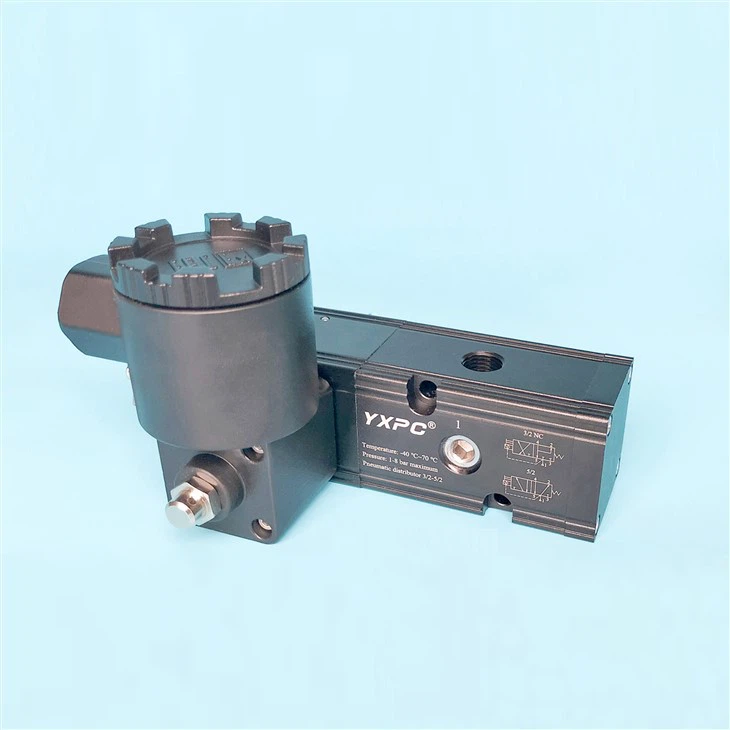
As a supplier, we understand that every customer's needs are different. That's why we offer a wide range of 5 way air valves to meet various requirements. Whether you're working on a small DIY project or a large industrial application, we have the right valve for you.
If you're interested in purchasing any of our 5 way air valves or have any questions about the difference between 5/2 way and 5/3 way valves, don't hesitate to get in touch. We're here to help you make the best choice for your project.
References
- Pneumatic Systems Handbook by David W. Green
- Industrial Pneumatics: Components and Systems by John M. Phelan