

Can a 110v solenoid coil be repaired?
As a supplier of 110v solenoid coils, I often encounter customers who wonder whether a malfunctioning 110v solenoid coil can be repaired. In this blog post, I'll delve into this question, discussing the factors that influence repairability, common issues, the repair process, and the pros and cons of repair versus replacement.
Factors Affecting Repairability
The repairability of a 110v solenoid coil depends on several key factors. The first is the extent of the damage. Minor issues such as a loose connection or a broken wire near the terminals may be relatively straightforward to fix. On the other hand, if the coil itself has burnt out due to overheating or a short - circuit, the repair process becomes more challenging.
The age and the type of the solenoid coil also play important roles. Older coils may have components that are difficult to source, and certain specialized or custom - made coils may not be easy to repair. Additionally, the design features of the coil matter. Some coils are constructed in a way that allows for easy disassembly and access to internal parts, while others are more complex and may require specialized tools to open.
Common Issues with 110v Solenoid Coils
Before considering a repair, it's essential to understand the common problems that can occur with 110v solenoid coils. One of the most frequent issues is overheating. This can be caused by factors such as excessive voltage, a blocked orifice in the solenoid valve [to which the coil is attached], or a malfunctioning power supply. When a coil overheats, the insulation on the wire may break down, leading to a short - circuit and potentially rendering the coil inoperable.
Another common problem is a broken wire. This can happen due to mechanical stress, such as vibrations or physical damage. If the wire is broken, the electrical current cannot flow through the coil properly, and the solenoid will not function. Additionally, issues with the insulation can also cause problems. Moisture ingress can deteriorate the insulation, leading to electrical leakage.
The Repair Process
If the damage to the 110v solenoid coil is minor, the repair process can be relatively simple. In the case of a loose connection, the first step is to carefully open the coil housing using the appropriate tools. Ensure that the power is disconnected before starting any work to avoid the risk of electric shock. Once the housing is open, check the connection points. If a wire is loose, tighten the terminal screw or re - solder the connection, depending on the type of connection used.
For a broken wire, it may be possible to splice in a new section of wire. First, identify the break point. Strip the insulation from both ends of the broken wire and a new wire segment. Then, twist the ends together and solder them securely. After soldering, insulate the joint using heat - shrink tubing or electrical tape.
In the event that the coil has burnt out, the repair becomes more involved. First, you need to determine if the coil can be rewound. This requires specialized knowledge and equipment. Measure the resistance of the coil to assess the extent of the damage. If the resistance is significantly different from the specified value for the 110v coil, it may indicate a burnt - out condition. To rewind the coil, you'll need to remove the old wire carefully, count the number of turns, and select the appropriate gauge of wire for replacement. Re - winding a solenoid coil is a delicate process that should only be attempted by those with the necessary skills.

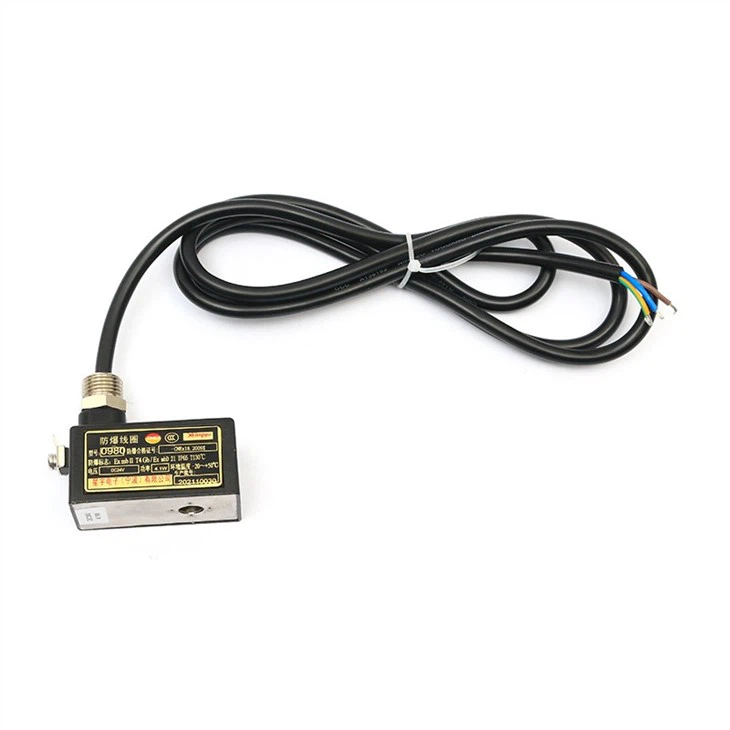
Repair vs. Replacement
When deciding whether to repair or replace a 110v solenoid coil, there are several aspects to consider. Cost is a significant factor. A simple repair may be relatively inexpensive, especially if it only involves fixing a loose connection or a minor wire break. However, if the coil needs to be rewound or if parts are difficult to source, the repair cost can quickly add up. In some cases, it may be more cost - effective to replace the coil with a new one.
Time is another consideration. A repair can take time, especially if it requires waiting for replacement parts or if the repair process is complex. If the solenoid is used in a critical application where downtime needs to be minimized, replacement may be the better option.
Reliability is also crucial. A repaired coil may not be as reliable as a new one. There is a risk that the repaired area may fail again, especially if the root cause of the problem, such as overheating, has not been addressed. A new coil from a reputable supplier, such as the 110v Ac Solenoid Coil we offer, is likely to have a higher level of reliability and a longer lifespan.
Complementary Parts and Extended Considerations
When dealing with solenoid coils, it's also important to consider complementary parts that work in conjunction with them. For example, the Solenoid Valve Spool Core is a critical component in many solenoid valve systems. A malfunctioning spool core can put additional stress on the solenoid coil, leading to premature failure. Ensuring that all related parts are in good working condition is essential for the overall performance of the solenoid system.
Additionally, if your application requires a different voltage, we also offer 220v Ac Solenoid Valve Coil. These coils are designed to meet the specific requirements of 220v systems and can provide a seamless replacement option when necessary.
Contact Us for Your Solenoid Coil Needs
In conclusion, while a 110v solenoid coil can sometimes be repaired, the decision to repair or replace depends on multiple factors. As a professional supplier, we have in - depth knowledge of solenoid coils and can provide guidance on the best course of action for your specific situation. Whether you need a new 110v solenoid coil, advice on repair, or details about other related parts, we're here to assist you.
If you're interested in discussing procurement options or have any questions about our solenoid products, feel free to reach out. You can start a conversation with us to determine the best solution for your solenoid needs. We're committed to providing high - quality products and excellent customer service.
References
- Smith, J. (2020). Solenoid Valve Handbook. Industrial Press.
- Johnson, A. (2019). Electrical Components and Their Applications. McGraw - Hill.
- Brown, S. (2021). Troubleshooting Electrical Systems. Wiley.