

What voltage is required for a fluid solenoid valve?
Hey there! As a supplier of fluid solenoid valves, I often get asked about the voltage requirements for these nifty little devices. So, I thought I'd sit down and write a blog post to clear up some of the confusion.
First off, let's talk about what a fluid solenoid valve is. In simple terms, it's a valve that uses an electromagnetic solenoid to control the flow of fluid. When an electric current is applied to the solenoid, it creates a magnetic field that moves a plunger or a poppet, which in turn opens or closes the valve. These valves are used in a wide range of applications, from industrial machinery to household appliances.
Now, the voltage required for a fluid solenoid valve can vary quite a bit. It depends on several factors, including the type of valve, its size, and the specific application it's being used for.
Common Voltage Ratings
The most common voltage ratings for fluid solenoid valves are 12V, 24V, 110V, and 220V. Let's break down each of these a bit.
12V
A 12V solenoid valve is often used in low - power applications or in systems where the power supply is limited. For example, in some small - scale automation projects or in battery - powered devices. These valves are relatively energy - efficient and can be a great choice if you're working on a project with a tight power budget. You can find a variety of 12V solenoid valves that are suitable for controlling the flow of water, air, or other fluids in small amounts.
24V
24V solenoid valves are extremely popular in industrial settings. They offer a good balance between power and safety. Many industrial control systems operate at 24V, so using a 24V solenoid valve makes it easier to integrate the valve into the overall system. These valves can handle a wider range of fluid pressures and flow rates compared to 12V valves, and they're often used in applications like pneumatic systems, where they control the flow of compressed air.
110V
In North America, 110V is a standard household voltage. So, 110V solenoid valves are commonly used in household appliances and some small - to - medium - sized industrial equipment. For instance, in some water - treatment systems or in small pumps. If you're in a region where the power grid supplies 110V, using a 110V solenoid valve can simplify the power connection process.
220V
In many other parts of the world, including Europe and Asia, 220V is the standard household and industrial voltage. 220V solenoid valves are used in larger industrial applications where more power is needed to operate the valve. They can handle high - pressure and high - flow rate situations, such as in large - scale water distribution systems or in heavy - duty manufacturing equipment.
Factors Affecting Voltage Requirements
Valve Size
Bigger valves usually require more power to operate. A larger solenoid valve has a larger plunger or poppet that needs to be moved, and more force is needed to do that. So, a large - sized fluid solenoid valve will typically need a higher voltage compared to a small - sized one. For example, a tiny solenoid valve used in a laboratory instrument might work just fine with a 12V supply, while a huge valve used in an oil refinery could require 220V or even higher.
Fluid Pressure
The pressure of the fluid that the valve needs to control also plays a role. If the fluid pressure is high, the valve has to work harder to open and close against that pressure. This means it needs more power, and thus a higher voltage. For instance, in a high - pressure hydraulic system, a solenoid valve will likely need a higher voltage to operate effectively compared to a valve used in a low - pressure water supply system.
Coil Design
The design of the solenoid coil itself can affect the voltage requirements. Different coil materials and winding configurations can result in different electrical characteristics. Some coils are designed to be more efficient and can operate at lower voltages, while others are built for high - power applications and need a higher voltage.
Choosing the Right Voltage
When choosing the voltage for a fluid solenoid valve, it's important to consider your power source. You need to make sure that the voltage of the valve matches the voltage available in your system. If you use a valve with a voltage rating that's too high for your power source, the valve won't work properly. On the other hand, if the voltage is too low, the valve might not be able to open or close fully, or it could overheat and get damaged.
Also, think about safety. Lower - voltage valves are generally safer to work with, especially in environments where there's a risk of electrical shock. If you're working in a home or a small - scale project, a 12V or 24V valve might be a better choice from a safety perspective.

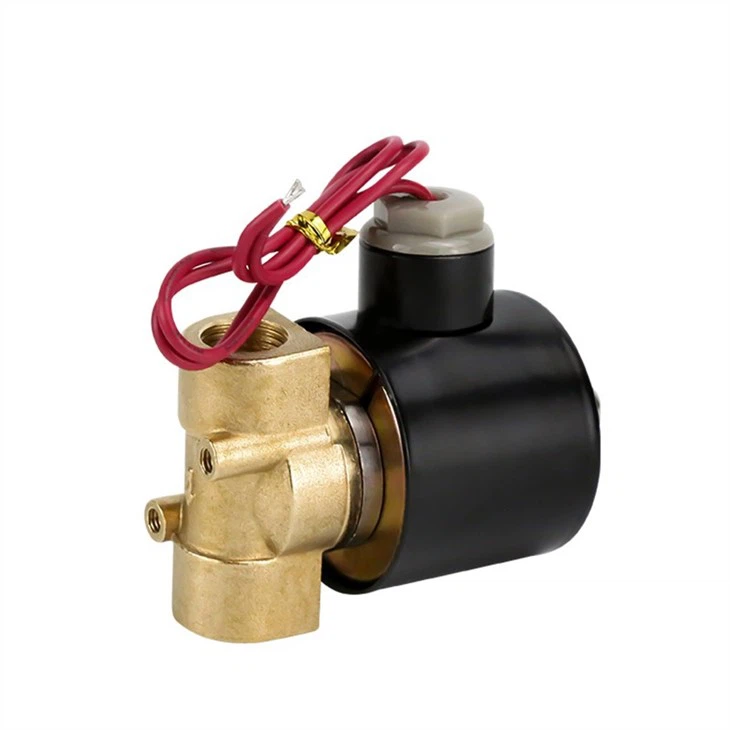
As a supplier, we offer a wide range of fluid solenoid valves with different voltage ratings. For example, you can check out our Solenoid Valve Gas Lpg, which comes in various voltage options to suit different applications. Our Pneumatic Steam Valve 2L series is also available in multiple voltage configurations, making it easy to integrate into your existing systems. And if you're looking for a valve with an electric timer control, our Solenoid Valve Electric Timer Controlled is a great option.
If you're still not sure which voltage is right for your application, don't hesitate to reach out to us. Our team of experts can help you analyze your needs and recommend the best valve for your project. Whether you're a DIY enthusiast working on a small project or a large - scale industrial company, we have the right solution for you.
We understand that getting the voltage right is crucial for the proper functioning of your fluid control system. That's why we're committed to providing high - quality solenoid valves with accurate voltage ratings. So, if you're in the market for a fluid solenoid valve, give us a chance to serve you. Contact us today to start the procurement process and let's work together to find the perfect valve for your needs.
References
- "Solenoid Valve Handbook" - A comprehensive guide on solenoid valve technology and applications.
- Industry standards and guidelines related to fluid control systems and electrical safety.