

What are the materials used for solenoid valve bodies?
Solenoid valves are essential components in various industries, controlling the flow of liquids and gases. As a solenoid valve supplier, I understand the importance of the materials used in the valve bodies. The choice of materials significantly impacts the valve's performance, durability, and suitability for different applications. In this blog, I will explore the common materials used for solenoid valve bodies and their characteristics.
Stainless Steel
Stainless steel is one of the most popular materials for solenoid valve bodies. It offers excellent corrosion resistance, making it suitable for applications in harsh environments where exposure to chemicals, moisture, or high humidity is common. Stainless steel valves are also known for their high strength and durability, which can withstand high pressures and temperatures.
There are different grades of stainless steel, with 304 and 316 being the most commonly used in solenoid valve manufacturing. Grade 304 stainless steel contains chromium and nickel, providing good corrosion resistance in most environments. Grade 316 stainless steel, on the other hand, has additional molybdenum, which enhances its resistance to pitting and crevice corrosion, making it ideal for applications in marine or chemical industries.
For example, in the food and beverage industry, stainless steel solenoid valves are preferred due to their hygienic properties and resistance to corrosion from acidic or alkaline substances. They are also used in water treatment plants, where they need to withstand the corrosive effects of chemicals used in the treatment process.
Brass
Brass is another widely used material for solenoid valve bodies. It is an alloy of copper and zinc, which offers good machinability, corrosion resistance, and electrical conductivity. Brass valves are relatively inexpensive compared to stainless steel valves, making them a cost - effective choice for many applications.
Brass solenoid valves are commonly used in low - pressure applications, such as in household plumbing systems, air conditioning units, and small - scale industrial processes. They are easy to manufacture and can be produced in various shapes and sizes. However, brass may not be suitable for applications where the fluid contains aggressive chemicals or high levels of chlorine, as it can corrode over time.
Plastic
Plastic materials are increasingly being used in solenoid valve bodies, especially for applications where weight, cost, and chemical resistance are important factors. Common plastics used in solenoid valve manufacturing include polyvinyl chloride (PVC), polypropylene (PP), and polytetrafluoroethylene (PTFE).
PVC is a rigid plastic that offers good chemical resistance and is relatively inexpensive. It is commonly used in water - based applications, such as irrigation systems and domestic water supply. PP is a lightweight and flexible plastic with good chemical resistance, making it suitable for applications in the chemical and pharmaceutical industries. PTFE, also known as Teflon, has excellent chemical resistance and low friction properties, making it ideal for applications where the fluid is highly corrosive or requires a non - stick surface.
Plastic solenoid valves are often used in applications where the pressure is relatively low, and the temperature is within the operating range of the plastic material. They are also popular in applications where weight reduction is a priority, such as in portable equipment or automotive applications.
Cast Iron
Cast iron is a strong and durable material that has been used in valve manufacturing for many years. It offers high strength and can withstand high pressures, making it suitable for applications in industrial settings, such as oil and gas pipelines, power plants, and water distribution systems.
However, cast iron is prone to corrosion, especially in the presence of moisture and oxygen. To improve its corrosion resistance, cast iron valves are often coated with a protective layer, such as epoxy or zinc. Cast iron solenoid valves are typically heavier and more expensive than valves made from other materials, but they offer reliable performance in high - pressure and high - temperature applications.
Aluminum
Aluminum is a lightweight and corrosion - resistant material that is increasingly being used in solenoid valve bodies. It has good thermal conductivity and is easy to machine, making it suitable for applications where weight reduction and heat dissipation are important.
Aluminum solenoid valves are commonly used in automotive, aerospace, and electronics industries. They are also used in some industrial applications where the fluid is not highly corrosive and the pressure is relatively low. However, aluminum may not be suitable for applications where the fluid contains aggressive chemicals or high levels of chlorine, as it can corrode over time.
Considerations for Material Selection
When selecting the material for a solenoid valve body, several factors need to be considered:
- Fluid Compatibility: The material of the valve body must be compatible with the fluid it will be handling. For example, if the fluid is corrosive, a material with high corrosion resistance, such as stainless steel or PTFE, should be chosen.
- Pressure and Temperature: The valve body material must be able to withstand the pressure and temperature conditions of the application. High - pressure applications may require materials with high strength, such as cast iron or stainless steel, while high - temperature applications may require materials with good thermal stability.
- Cost: The cost of the material is an important consideration, especially for large - scale applications. Materials such as brass and plastic are generally more cost - effective than stainless steel or cast iron.
- Application Requirements: The specific requirements of the application, such as the need for hygienic properties, electrical conductivity, or weight reduction, should also be considered when selecting the valve body material.
Our Product Offerings
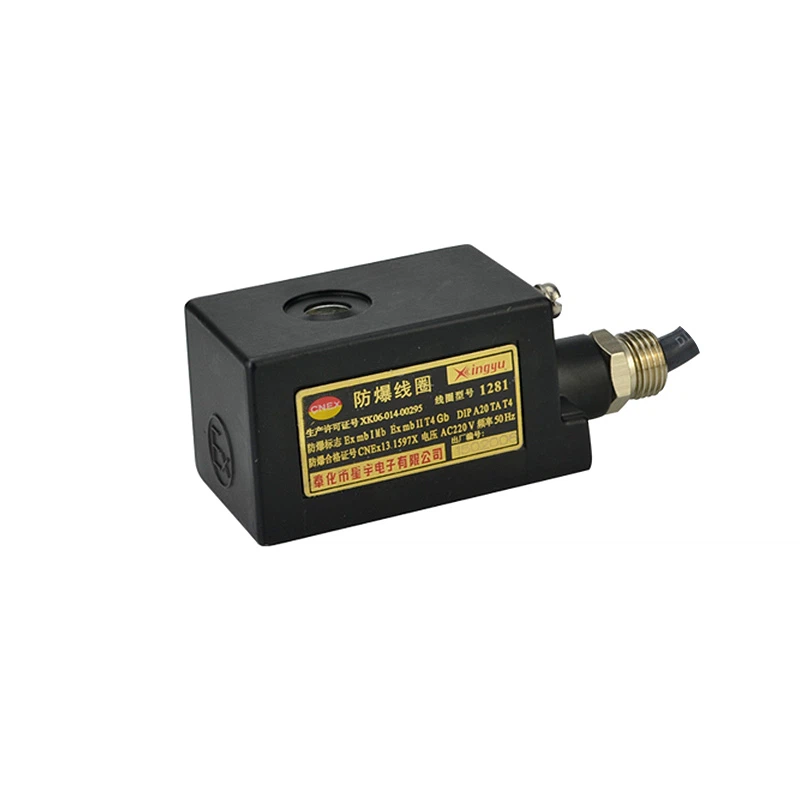
As a solenoid valve supplier, we offer a wide range of solenoid valves made from different materials to meet the diverse needs of our customers. Our 24vdc Explosion Proof Solenoid Coil is designed for applications where explosion - proof requirements are necessary. It is made with high - quality materials to ensure reliable performance.
We also have a variety of Air Pneumatic Solenoid Valve options. These valves are suitable for pneumatic systems and are available in different materials, including brass and stainless steel, to meet various application requirements.
For applications where explosion - proof conditions are needed with an AC220 power supply, our Explosion Proof Solenoid Valve Ac220 is a great choice. It is designed to ensure safety and reliable operation in hazardous environments.
Contact Us for Purchasing
If you are in the market for solenoid valves and need more information about our products or have specific requirements, we encourage you to contact us. Our team of experts is ready to assist you in selecting the right solenoid valve for your application. Whether you need a valve for a small - scale project or a large - scale industrial application, we have the products and knowledge to meet your needs.

References
- ASM International. (2004). ASM Handbook, Volume 13A: Corrosion: Fundamentals, Testing, and Protection.
- Callister, W. D., & Rethwisch, D. G. (2010). Materials Science and Engineering: An Introduction. Wiley.
- Munson, B. R., Young, D. F., & Okiishi, T. H. (2009). Fundamentals of Fluid Mechanics. Wiley.