

How does the power consumption of a 220v air solenoid valve compare to other voltages?
Hey there! As a supplier of 220v air solenoid valves, I often get asked about how the power consumption of these valves stacks up against those with other voltages. In this blog, I'll break down the differences and give you a better understanding of what to expect.
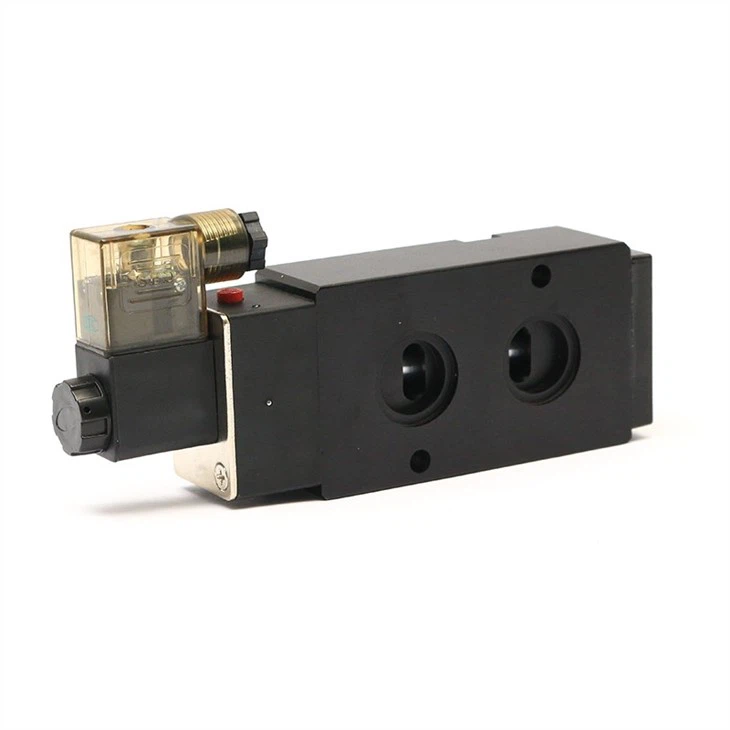
First off, let's talk about what a solenoid valve is. A solenoid valve is an electromechanical device that controls the flow of fluid or gas. It works by using an electromagnetic coil to open or close a valve. When the coil is energized, it creates a magnetic field that pulls a plunger or piston, allowing the fluid or gas to flow. When the coil is de-energized, the plunger or piston returns to its original position, stopping the flow.
Now, let's get into the power consumption. The power consumption of a solenoid valve depends on a few factors, including the voltage, the coil resistance, and the duty cycle. The duty cycle is the percentage of time that the valve is energized. For example, if a valve has a duty cycle of 50%, it means that it is energized for half of the time and de-energized for the other half.
In general, the power consumption of a 220v air solenoid valve is higher than that of a lower voltage valve. This is because the higher voltage requires more energy to create the magnetic field needed to open and close the valve. However, the actual power consumption will depend on the specific valve and its application.
Let's compare the power consumption of a 220v air solenoid valve to a Pneumatic Solenoid Valve 12 Volt. A 12v valve typically has a lower power consumption because it requires less energy to create the magnetic field. However, it may not be suitable for all applications. For example, if you need to control a large flow of fluid or gas, a 220v valve may be more appropriate.
Another factor to consider is the duty cycle. If a valve has a high duty cycle, it will consume more power over time. For example, if a valve is energized for 80% of the time, it will consume more power than a valve with a duty cycle of 20%. It's important to choose a valve with a duty cycle that is appropriate for your application.
In addition to power consumption, there are other factors to consider when choosing a solenoid valve. These include the flow rate, the pressure rating, and the material of the valve. It's important to choose a valve that is suitable for your specific application.
Now, let's talk about some of the benefits of using a 220v air solenoid valve. One of the main benefits is that it can handle higher pressures and flow rates than a lower voltage valve. This makes it ideal for applications where you need to control a large flow of fluid or gas.
Another benefit is that a 220v valve is more reliable than a lower voltage valve. This is because it has a stronger magnetic field, which means that it can open and close more quickly and accurately. This can help to reduce the risk of leaks and other problems.
Finally, a 220v valve is often more cost-effective in the long run. While it may have a higher upfront cost, it can save you money in the long run by reducing energy consumption and maintenance costs.
If you're in the market for a solenoid valve, I recommend considering a Double Acting Actuator Valve Pneumatic or a Pneumatic Three Way Valve. These valves are designed to provide reliable and efficient control of fluid and gas flow.
In conclusion, the power consumption of a 220v air solenoid valve is higher than that of a lower voltage valve. However, it offers several benefits, including the ability to handle higher pressures and flow rates, greater reliability, and cost-effectiveness in the long run. If you're in the market for a solenoid valve, I encourage you to consider a 220v valve for your application.
If you have any questions or would like to learn more about our 220v air solenoid valves, please don't hesitate to contact us. We'd be happy to help you find the right valve for your needs.

References
- "Solenoid Valves: How They Work and Their Applications." Engineering.com.
- "Power Consumption of Solenoid Valves." Valve Magazine.